
Does this sound familiar?
➤ You’ve followed tutorials or courses but still feel stuck – like you’re missing key steps or skills
➤ You've tried figure or portrait drawing and felt discouraged
➤ Drawing feels unpredictable - sometimes it works, often it doesn't
➤ You're tired of guessing what to practice next and want a clear learning path
➤ You've started to wonder if maybe you just don't have the talent for drawing
It doesn't have to feel this way.
The truth is, realistic drawing is a skill, not an innate talent.
But - like any skill, it needs to be learned in the right order, starting with a solid foundation.
Most students struggle not because they lack talent or ability – but because they skip foundational skills without realizing it, and leap into advanced subjects before they're ready.
This makes drawing feel - at best - like magic, and at worst - impossible.
Introducing the Atelier at The Drawing Source
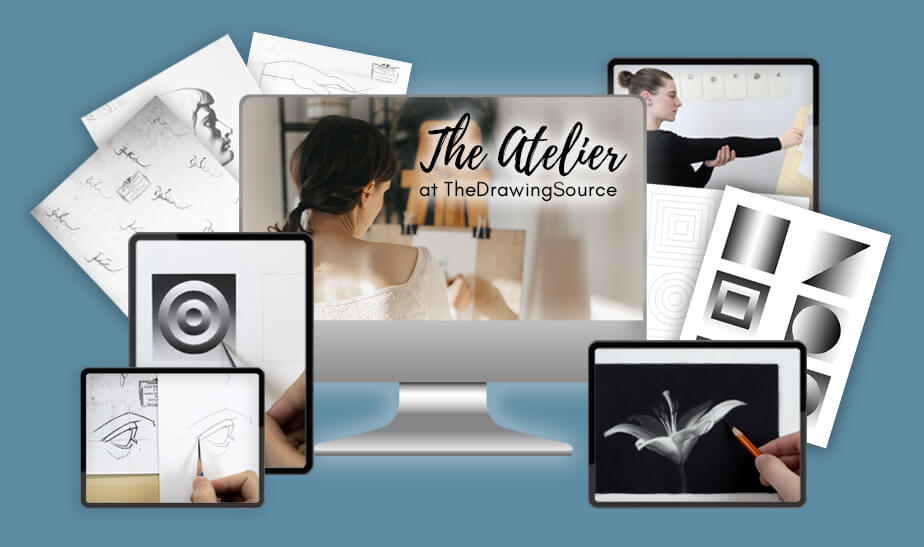
A membership for building the 6 foundational skills that unlock every drawing subject, through an intentional step-by-step curriculum.
Here's something most drawing courses don't tell you:
Foundational skills are not “beginner skills”.
They’re the core abilities required to draw anything.
There’s a common misconception that complex subjects — like portraits, figures, or intricate textures — require a different set of skills. But this isn't how drawing works.
To draw portraits and figures successfully, we don't need different skills.

We need the same foundational skills, developed to a higher level.

In the Atelier, you'll build those skills from the ground up.
You'll start with simplified versions of the portrait and figure.
Then, as you draw more advanced subjects, you'll raise the level of your foundations — preparing you for the full complexity of the portrait and figure.

What changes when you join the Atelier:
➤ You have a clear path forward. No more wondering what to practice, or whether you're missing something. The Atelier gives you a structured path that always shows you where you are and what to practice next — so you can focus on drawing instead of figuring out how to learn it.
“I was using another online drawing course, which was good, but I still felt confused and like I was still not getting the basics. Some how I found you and started the Atelier. I love that you really start with the very basics that I didn't know - just what I needed. I feel like I finally have a teacher!” — Barbara S.
➤ You learn to trust your eye and see your own mistakes. One of the most valuable skills a drawing student can develop is the ability to diagnose their own work. In the Atelier, you'll develop the perceptual skills and knowledge to spot what's off in your drawings — and know how to fix it.
“It was so satisfying to be able to recognize parts of my drawing that were off. On the final drawing I was actually identifying very subtle differences, as well as seeing ones I had missed on my previous drawings.” — Jan G.
➤ You stop feeling like drawing is a mystery. You’ll start understanding why drawing works the way it does, and how to move through the drawing process. Instead of hoping a drawing comes together, you’ll know how to make it happen.
“In the lesson where you're talking about the main action line - it is so clear that suddenly things really start to make sense. I might have read a million times about a main action line, but now it finally makes sense and has sunk in. Thank you.” — Helen G.
➤ You make progress you can actually see. You won’t just have the vague sense that you're "getting better," but concrete, visible improvement in your drawings. And, because the curriculum is progressive, you'll find yourself drawing subjects you couldn't have attempted before.
“It was so satisfying to be able to recognize parts of my drawing that were off. On the final drawing I was actually identifying very subtle differences, as well as seeing ones I had missed on my previous drawings.” — Jan G.
➤ You have a program you can actually stick with. If you've abandoned drawing courses before, you're not alone. The Atelier is designed so that learning feels manageable and satisfying. Clear, step-by-step video lessons, detailed drawing demonstrations and animations make complex ideas easy to grasp. And when your mindset gets in the way, short Mindset Minutes segments help you stay motivated and keep going.
“My gratitude to you for designing an easy to understand and intuitive drawing course. I am thoroughly enjoying it. I have taken up other online courses but have some how given up due to frustration, as I was unable to understand some of the concepts. Thank you for such nuanced explanation and mindset audios. They are very helpful.” — Iqra R.
➤ You build skills that transfer. Every subject you draw — still life, portrait, figure — relies on the same foundations you develop here, preparing you for everything you want to draw.
"I have been following the Atelier course and find it fantastic. It is incredible how much I have progressed. After oil painting for six years I realize that this is where I should have started!" — Stanley C.
"I feel like you were able to push my drawing furthest with your lessons and I resonate with your way of teaching." — Adina S.


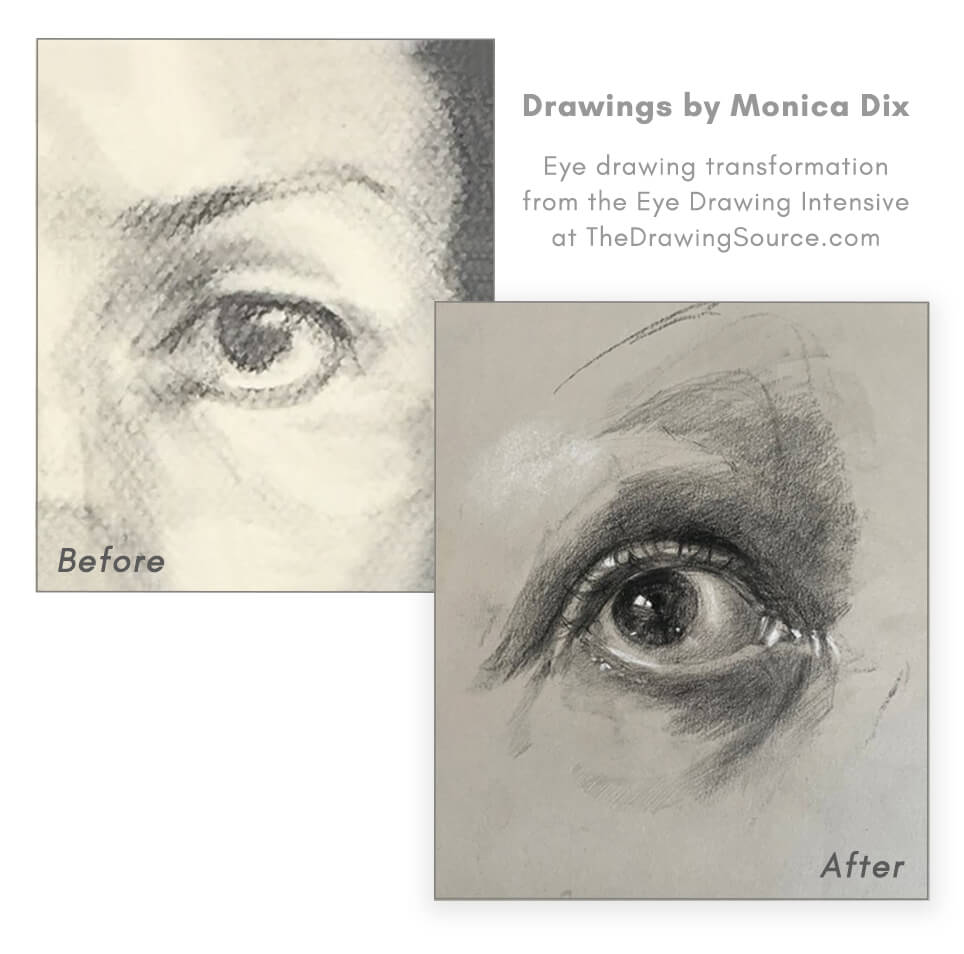
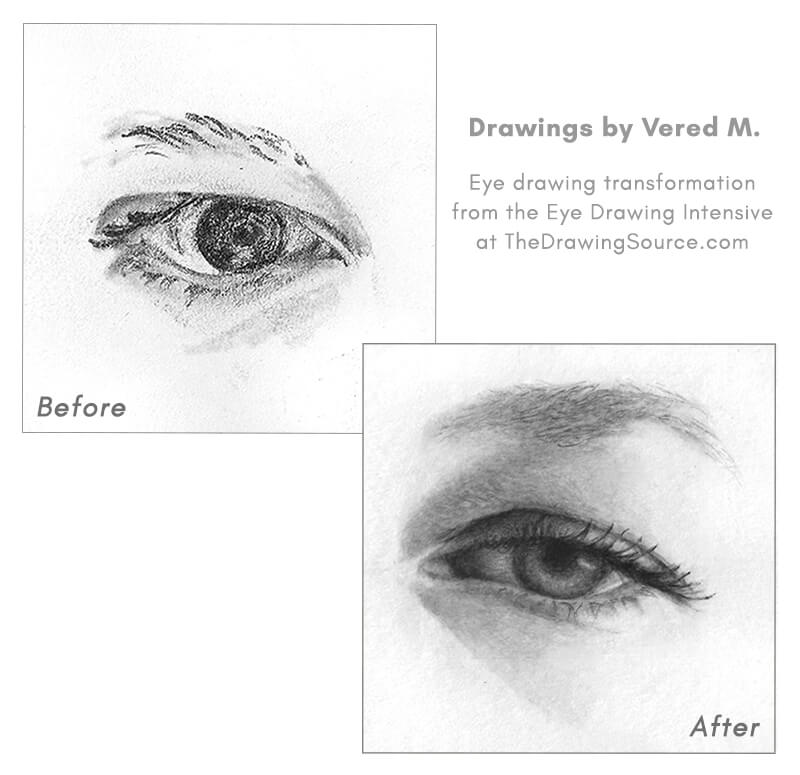
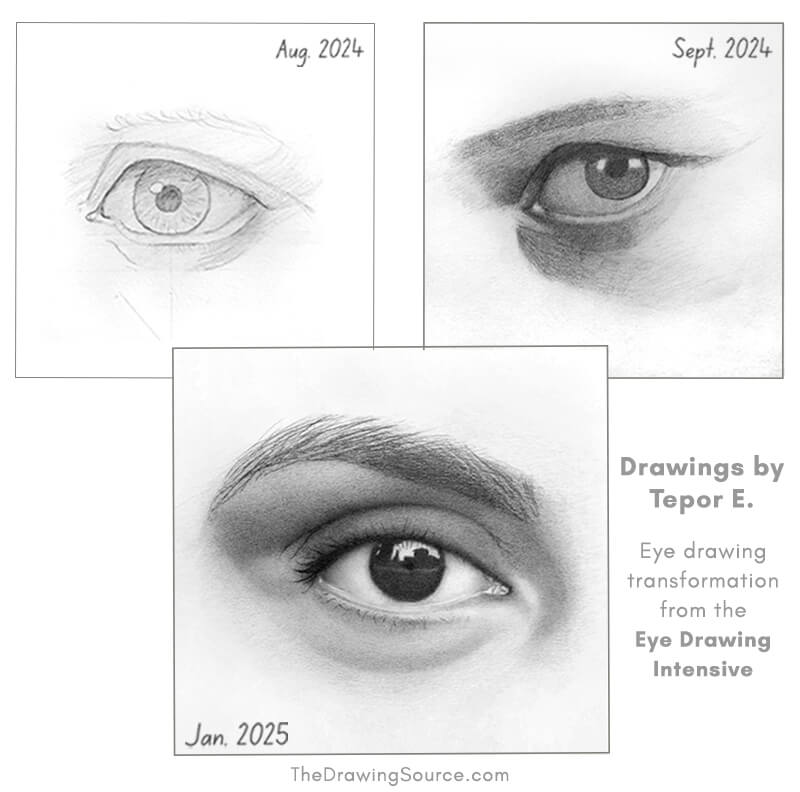
"I found Marina after unsuccessfully trying to learn from a variety of other places, and it really clicked for me. That's when I really started making actual improvements." — Wendy L.
How to Learn Realistic Drawing at The Drawing Source
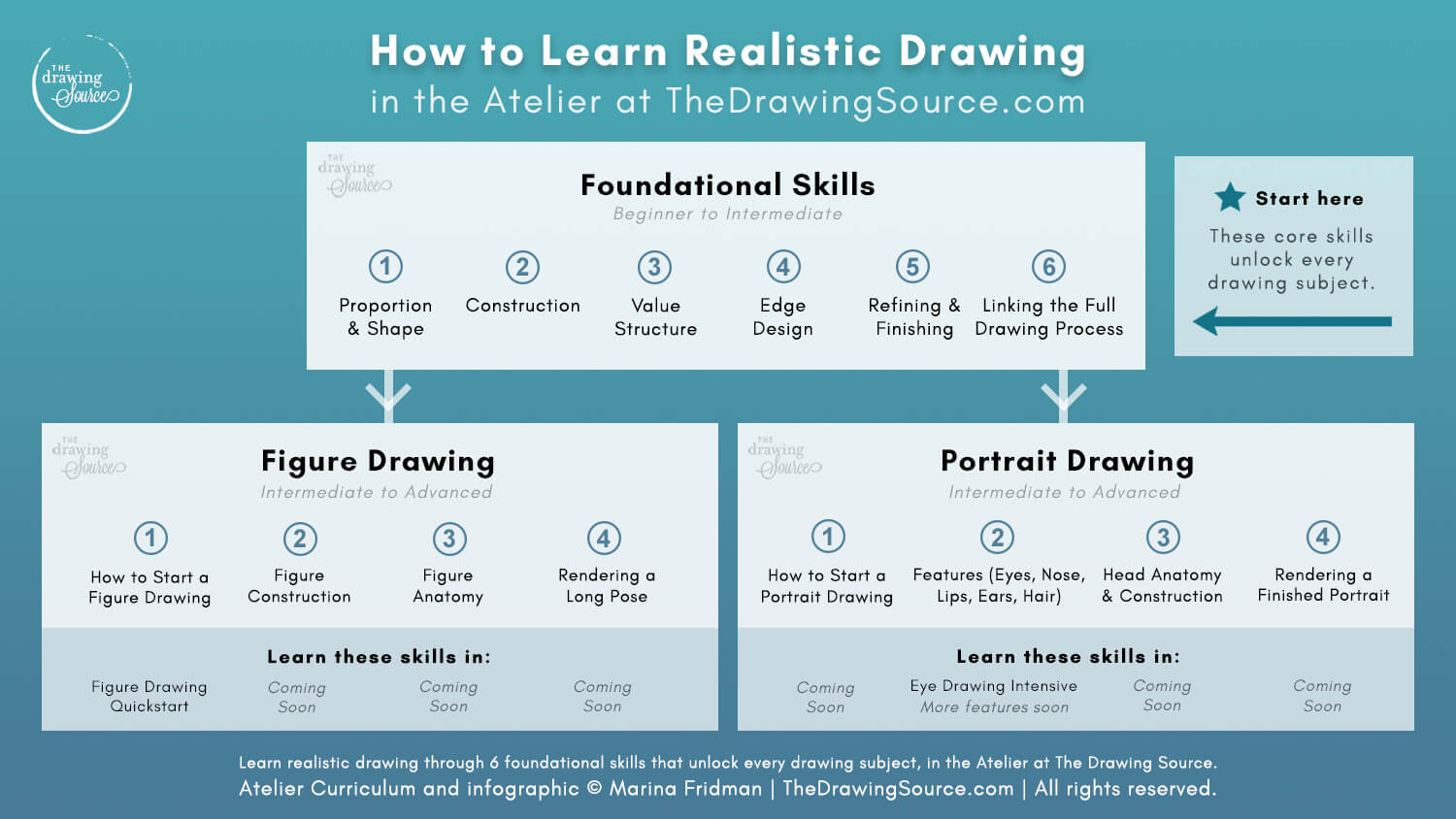
The map below shows the full Atelier curriculum being developed here at The Drawing Source.:
What's Included in the Atelier
Your membership includes access to the core curriculum as it develops, plus a growing library of additional courses.
The Atelier Foundations Curriculum
A carefully structured, step-by-step pathway designed to build your realistic drawing skills from the ground up. Organized into phases, the curriculum builds essential skills in the right order, with every course preparing you for the next.

Phase 1: Proportion and Shape

1. Foundations of Drawing Technique
Realistic drawing requires control and precision of the hand. In this short course, develop the core technical skills that all realistic drawing depends on — including nuanced line work, subtle pressure adjustments, and more.
2. Intro to Accuracy & Measurement
Accurate seeing and measuring creates likeness and believability in a drawing. Learn 10 accuracy and measurement techniques, train your eye and perceptual skills, gain confidence in the first steps of the drawing process, and start learning portrait anatomy!
3. 14-Day Daily Drawing Drills Challenge
Dexterity, block-in strategies & comparative measurement. Build hand–eye coordination through focused drills, while learning comparative measurement & essential block-in strategies preparing you for more complex subjects.
Phase 2: Values, Edges & the Drawing Process
4. Smooth Shading in Graphite
Bring your drawings to life with smooth, realistic shading: create even tones and gradations, simplify and organize values, build believable depth through edge transitions, and model 3D form using light and shadow.
5. The Drawing Process: from Start to Finish
Connect the steps and skills you've built into a clear, repeatable drawing process — from block-in to refinement. Practice moving through each drawing stage so you can apply the same method to any subject you draw.
6. Your First Finished Drawing *Coming Soon*
Create your first fully developed, realistic drawing. Bring together everything you’ve learned — from accurate block-ins to refined shading — in a polished artwork you’ll be proud to frame. *Coming Soon*

Additional Courses Included in the Atelier:
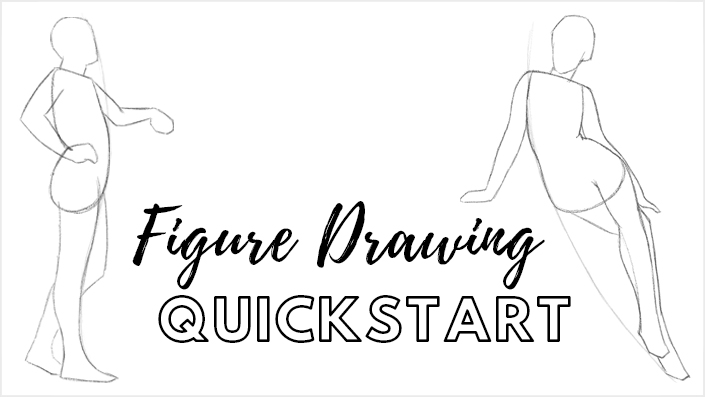
Learn the 7 essential first steps of every strong figure drawing, and how to adapt these steps to suit any pose.
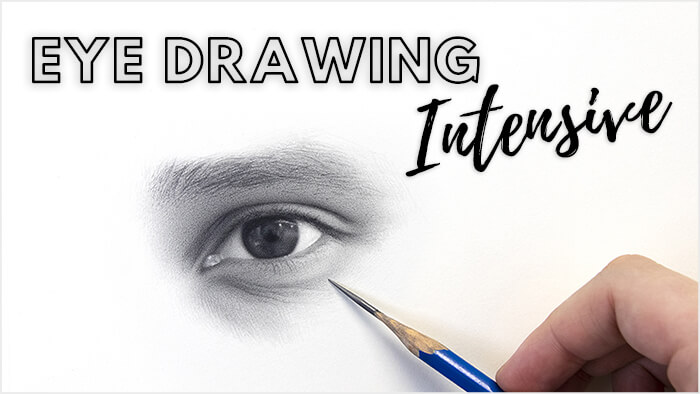
Learn to draw realistic, expressive eyes that add emotion and connection to your portraits.

An overview of the drawing process, where you draw the flower above with me, step by step, in charcoal.

Learn to use white pencils on black paper to create dramatic drawings. This course is still in progress - more toned paper techniques will be added over time.

How to Choose and Edit Excellent Reference Photos for Drawing - because not all photos make good references for drawing!

How to edit your drawings so they look as accurate and professional onscreen as they do in person - using Adobe Photoshop or a free online photo editor.

Develop a productive mindset while learning how to draw: because our mindset is often the biggest challenge when learning a new skill!
What Students are Saying:
"This course transformed my drawings. Absolutely brilliant, so grateful for your clear tuition." –Kate N.
“I have been following the Atelier course and find it fantastic. It is incredible how much I have progressed. After oil painting for six years I realize that this is where I should have started! Thank you for your wonderful and insightful lessons.” –Stanley C.
“I was using another online video course, which is good, but I still felt confused and felt like I was still not getting the basics. Some how I found you and started the Atelier. I love that you really start with the very basics that I didn't know - just what I needed. I feel like I finally have a teacher! Thank you!” -Barbara S.
"Your classes (and you) are excellent. Truly. Thank you for making them affordable. I enjoy watching and listening to you. Your voice and articulation and delivery is so clear and crisp, and your descriptions and step by step is thoughtful and thorough, and easy to follow. I learned so much from you and my drawing has improved. Thank you, so much, for your exceptional program. It is so helpful." -Susan S.
“My gratitude to you for designing an easy to understand and intuitive drawing course. I am thoroughly enjoying it.
I have taken up other online courses but have some how given up in between due to frustration, as I was unable to understand some of the concepts. Thank you for such nuanced explanation and mindset audios. They are very helpful.” -Iqra R.
“I used all your suggestions and improved on the first drawing of the eyes that I did a couple of days ago, and it is perfect now, I am so excited and happy about the outcome. Thank you.” -Betty H.
"I have very much appreciated your step by step approach to teaching. This is the first art class I have taken that makes sense to me. Most of the others have been like this: “Here is this still life/portrait sculpture. Copy what you see and I will come around and make suggestions”. -Nancy S.
“This really was a rewarding exercise in terms of how many inconsistencies I spotted in my drawing. Observation not being a strong point, it was so satisfying to find myself able to recognize parts of my drawing that were off (there were many!) On the final drawing I was actually identifying very subtle differences as well as seeing ones I had missed on my previous drawings.” -Jan G.
“Marina, you are such a fine teacher. You know the artistic process well and also know how to break steps down into manageable bits one can become aware of and learn. You are encouraging also!” -Wendy B.
“You are a brilliant teacher and the detail you give is unparalleled. I have not seen any course as good.” -Anne B.
“As always, excellent presentation with tips and clear examples!” -Jeff M.
“I am really enjoying the course. I love the way you break down every aspect of the techniques that are used.” -Anthony P.
"I found Marina after unsuccessfully trying to learn from a variety of other places, and it really clicked for me. That's when I really started making actual improvements." -Wendy L.
“Having bludgeoned my way through several drawing courses before I discovered the Atelier, I implore you Marina, do not ever stop teaching! Your educational work is a quantum leap beyond anything I have found, and is an inspiration to me each time I tune in. Thank you for making your learning and expertise available to so many, including me. You will certainly elevate the quality of art in the world both with your own work and with your teaching.” -Peter B.
Who this program is for:
This membership is for you if ...
-
You're a beginner looking to start drawing (even if you're a little nervous!)
-
You sometimes think, "I can't draw," or "I have no artistic talent" — but still want to learn!
-
Or, you have some drawing experience, but want to fill in gaps in your foundational skills and knowledge
-
You've tried other drawing courses but felt that they moved too fast or skipped steps
-
You want to learn realistic (representational) drawing specifically
-
You enjoy my teaching and/or drawing style
-
You’re craving clear, structured guidance — not random tutorials
- You’ll happily put in consistent practice time — if someone would just show you exactly what and how to practice
The Atelier may not be the right fit if ...
-
You're looking for quick hacks or shortcuts
-
You're not interested in representational drawing
-
You're not ready or able to commit to regular practice
Who You'll Learn From
Hi there! I'm Marina - a professional visual artist, arts educator, former tenure-track college professor of art, and founder of The Drawing Source.

In my creative practice these days, I create 'drawing installations': large-scale drawings that transform a space, such as the one below. (Yes, entirely hand-drawn using charcoal on white paper!)

Below: finishing a drawing of Charon, Pluto's largest moon (timelapse video)
About Marina

Marina Fridman (BFA, MFA) is a professional visual artist, arts educator, and founder of The Drawing Source. Before launching The Drawing Source, she held a tenure-track teaching position at Northwestern Polytechnic in Alberta, Canada.
She is a three-time recipient of the Elizabeth Greenshields Foundation Grant, and her work has been published in Art in America, Booooooom, Hi-Fructose, Foundations of Drawing (Random House), and Strokes of Genius, among others.
She has been awarded prestigious residencies including MacDowell, and her drawings have been exhibited and collected in the US, Canada, and the Middle East.
Most importantly: She enjoys distilling complex drawing concepts into steps that are easy to understand and put into practice - and considers herself successful when her students increase both their skills and their enjoyment of the drawing process.
Marina's work has been featured in:


But before that ...
I certainly had to learn how to draw, and I've been where you are in your drawing journey!
Below are examples of my own drawing progress.

Examples of my own drawing progress while I was learning.

I've been where you are in your drawing journey!
Frequently Asked Questions
Is this only for beginners?
Not at all! The Foundational Skills curriculum is best for beginners and intermediate students who want to fill in some gaps in their drawing knowledge or skills.
These courses are progressive, gradually becoming more challenging, and building on the previous ones.
There are also intermediate-to-advanced courses like Figure Drawing Quickstart and the Eye Drawing Intensive.
What is the time commitment?
This is a self-paced program. You're welcome to work through the lessons at your own pace and at your convenience.
Do I have to go through the courses and lessons in the order you recommend?
Though the intentional order of the curriculum is a strong feature of the program, you can certainly work through the lessons or courses in whichever order you choose.
You have access to all included courses as soon as you become a member.
What is Bargue drawing? (Which we'll use in Intro to Accuracy and Measurement)
The Charles Bargue drawing method involves drawing from prints of plaster casts. It's a very methodical exercise that allows students to learn the stages of the drawing process, methods of measurement, to train their eye and perceptual skills, and to control their pencil.
It’s particularly excellent if you're a nervous beginner (or think that you can’t learn to draw!) as it's much less intimidating to draw 'from the flat' (from a copy) than from life when first getting started.
However, because Bargue drawing is a tool for honing one’s eye and shading/rendering abilities, it’s a great exercise for intermediate students as well.
Can I ask questions or have drawings critiqued inside the Membership?
Currently this is a self-study program. However, when a new course is released, I answer questions under those new lessons for a limited period of time.
You can work with me one-on-one by:
✨ Booking an individual critique here
✨ Joining the Creative Drawing Studio here.
What is the cancellation policy?
You can cancel at any time from the account management page. Your membership will auto-renew monthly or annually - depending on what option you choose - until you cancel. You'll need to cancel before the renewal date in order to avoid the next charge.
Can I access the content once I have cancelled?
No, the membership works like a Netflix subscription: you have access to all of the content while you're a member, and course access is revoked upon cancellation.